

Introduction
As men and women age, the risk of pregnancy complications rises, affecting both maternal and foetal health. Women experience a notable decline in fertility around age 30, accelerating in their mid-30s. Pregnancy complications become more prevalent with advancing age. For men, fertility decline is more subtle, yet those over 45 contribute to longer conception times, higher miscarriage risks, and increased chances of mental health and developmental issues in their offspring. While individual experiences vary, understanding age-related fertility changes is crucial for informed family planning decisions.
Female age and fertility
With advances in IVF and celebrities having babies into their 40s, you could be forgiven for thinking that age is no longer a barrier to starting a family.
But the reality is that getting pregnant and having a healthy baby does become more difficult as women get older.
By the age of 36, the chance of a woman conceiving each month has decreased by almost half from the time that she was most fertile in her early 20s. This downward trend continues and by the age of 45 the average chance of getting pregnant each month is just 1%.
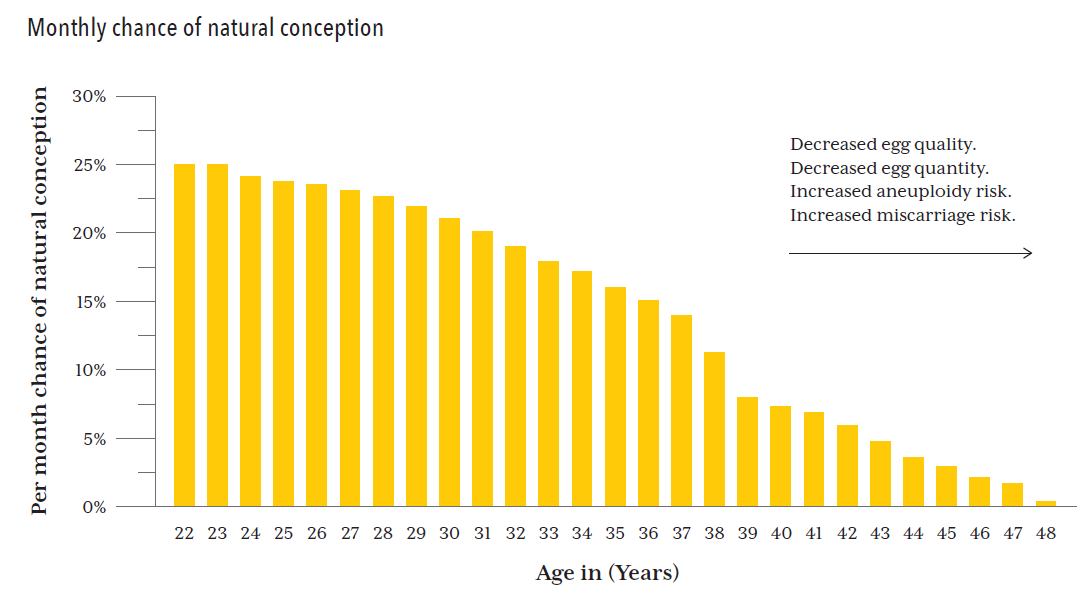
When younger women are faced with infertility there is more likely to be a medical cause - such as blocked fallopian tubes or a partner with a low sperm count. Older women are more likely to have unexplained infertility, and their problems are more likely to be linked to poor egg quality.
Older women are also more likely to conceive a baby that has abnormalities due to chromosome problems, which will often mean a pregnancy ends in miscarriage within the first 12 weeks.
Some studies have shown that the man’s age can also have an impact on a couple’s ability to conceive. Although the decline in fertility is not as marked as it is in women, there is an increase in genetic defects in the sperm of men aged more than 40.
And having had a baby previously is unfortunately not an indication that you will remain fertile. So-called secondary infertility is an issue for about 10% of couples.
Male age and fertility
While the impact of female age on fertility has long been recognised, recent research indicates that the age of the male partner also plays a crucial role in influencing pregnancy success and pregnancy health.
Typically, male fertility begins to decline around the ages of 40 to 45, coinciding with a decrease in sperm quality. Advancing male age not only diminishes the overall probability of conception but also extends the time required to achieve pregnancy (measured by the number of menstrual cycles) and heightens the risks of miscarriage and foetal death.
Offspring of older fathers face an elevated risk of mental health issues, albeit still infrequent. Children born to fathers aged 40 or older exhibit a fivefold increase in the likelihood of developing an autism spectrum disorder compared to those born to fathers aged 30 or younger. Moreover, they bear a slightly heightened risk of developing schizophrenia and other mental health disorders later in life.

FAQs
Seeking help
Couples in their late 30s and 40s, both women and men, should consider early investigation for fertility concerns, especially if facing issues like blocked tubes. Seeking medical guidance enhances the chances of successful conception. Even without apparent fertility factors, active treatment should be considered if natural pregnancy delays. Studies highlight IVF as a valuable option in such cases. Regardless of individual circumstances, staying informed about age-related fertility changes is essential for making realistic family planning decisions.




.png "Genea logo")
.png)
