

Does the age of IVF culture media affect your chances of success?
Key takeaways
- A new Genea led study of almost 10,000 IVF cycles across eight Australian clinics found that the age of embryo culture media, within its shelf life, made no difference to outcomes.
- There was no measurable impact on embryo development, pregnancy rates, live birth rates or baby birthweight, regardless of how close the media was to its expiry date.
- The findings, published in the international journal Human Reproduction, support the safe use of culture media for its entire approved shelf life.
- This research helps reduce unnecessary waste in IVF laboratories, supporting more sustainable fertility care without compromising safety or outcomes.
- The study reflects Genea's ongoing commitment to research that directly improves laboratory practice for patients across Australia.
What is IVF culture media, and why does it matter?
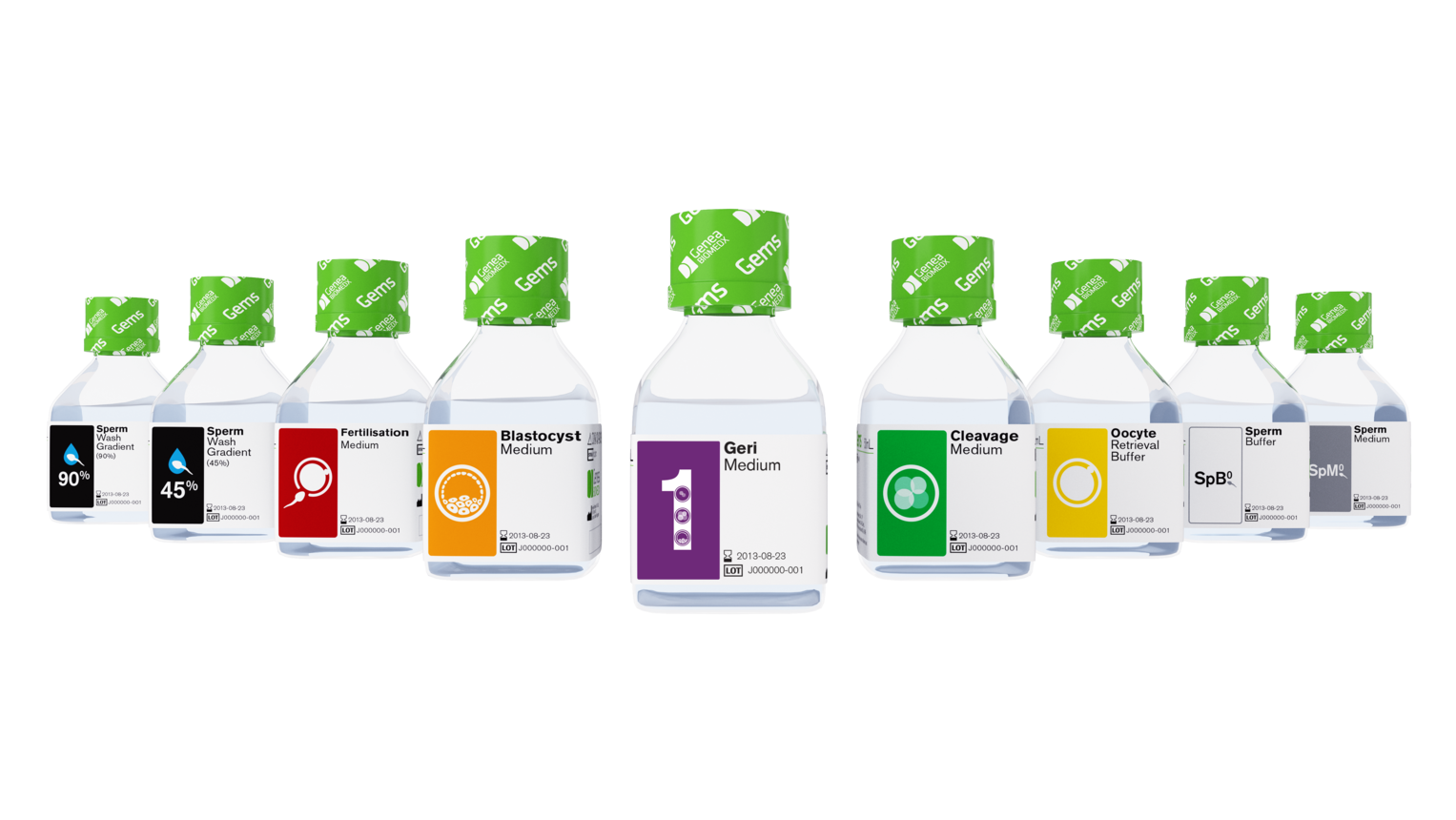
When an egg is fertilised in the laboratory during IVF (in vitro fertilisation), the resulting embryo does not grow inside the body straight away. Instead, it develops for several days in a carefully formulated liquid called culture media, sometimes described as the embryo's temporary home outside the body.
Culture media is designed to mimic the natural environment of the fallopian tube and uterus, supplying the nutrients, proteins and other components an embryo needs in its earliest days of life. Every batch of media is manufactured to strict quality standards and given a shelf life, much like any other laboratory or medical product.
For years, there has been debate within the fertility science community about whether culture media performs consistently across its entire shelf life, or whether embryos cultured in "older" media (media closer to its expiry date, but still within date) might have different outcomes compared to embryos cultured in freshly manufactured media. It is a question that matters because it touches on both the safety of treatment and the efficiency of the laboratories that support it.
The question our researchers set out to answer
A 2026 study by Morbeck, Hesketh and Bui, published in Human Reproduction, set out to settle this question with real world, large scale evidence rather than assumption. The resulting study, "Does the age of IVF culture media affect your chances of success?", was published in 2026 in Human Reproduction, one of the most respected peer reviewed journals in reproductive science.
Rather than a small laboratory trial, the research drew on data from almost 10,000 individual IVF cycles carried out across eight Australian fertility clinics. This scale gives the findings real statistical weight, and reflects outcomes across a genuinely diverse group of patients, treatment protocols and laboratory settings, not just a single clinic or a narrow patient group.
The researchers specifically looked at whether the age of the culture media used, measured against its full approved shelf life, had any relationship with four key outcomes that matter most to anyone undergoing treatment:
- Embryo development in the laboratory
- Pregnancy rates
- Live birth rates
- Baby birthweight
FAQs
About the authors

Dr. Dean Morbeck
Genea Chief Scientific Officer
Dr. Dean Morbeck, PhD, HCLD, is Chief Scientific Officer for Genea Fertility and adjunct Associate Professor at Monash University.
View profile
Diana Bui
Diana Bui - Genea Director of Clinical Embryology
Diana Bui, Director of Clinical Embryology at Genea, has been part of the Genea Embryology team for over 13 years and an Embryologist for over 21 years.
View profileReferences
- Morbeck, D. E., Hesketh, N., & Bui, D. (2026). Culture media age does not affect IVF outcomes. Human Reproduction, 41(2), 178–184. https://doi.org/10.1093/humrep/deaf236.

Ready to start your fertility journey?
Speak with our Fertility Concierge team to discuss your options and find the right path for your journey.