
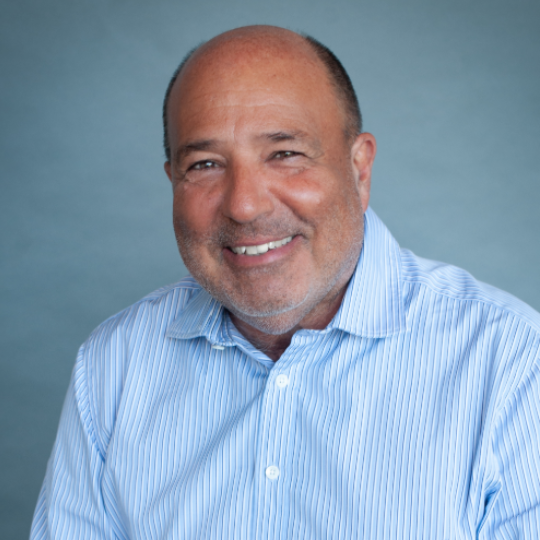
A/Prof Gavin Sacks - Group Medical Director and Fertility Specialist
MA DPhil FRCOG FRANZCOG CCSST
Fertility Specialist at Genea Bondi Junction and Sydney CBD
Biography
Dr Gavin Sacks is a highly regarded Sydney fertility specialist and Group Medical Director at Genea with over 20 years of clinical experience, a PhD in reproductive immunology from Oxford, and an internationally recognised research profile. He has a special interest in challenging cases and often provides second opinions for patients with repeated unsuccessful IVF cycles.
Known for his empathic, individualised approach and scientific rigour, Dr Sacks is dedicated to ensuring that couples and individuals trying to conceive undergo as effective treatment as is possible for them.
Available for: Online bookings | Telehealth consultations
About Dr Sacks
Experience and qualifications
Dr Sacks completed his medical training at the Universities of Cambridge and Oxford, before undertaking specialist training in obstetrics and gynaecology at the Hammersmith Hospital in London, one of the world’s leading centres for reproductive medicine. He holds a PhD in reproductive immunology from the University of Oxford and has been awarded several multi-million dollar research grants to continue this work in Australia.
He holds the Certificate of Completion of Specialist Surgical Training (CCSST) in Reproductive Endocrinology and Infertility - the UK equivalent of the Certificate in Reproductive Endocrinology and Infertility (CREI), held by approximately 5% of fertility specialists in Australia. He is also a Fellow of the Royal College of Obstetricians and Gynaecologists (FRCOG, UK) and a Fellow of the Royal Australian and New Zealand College of Obstetricians and Gynaecologists (FRANZCOG).
Dr Sacks holds a conjoint Associate Professorship at the University of New South Wales (UNSW) and a Visiting Professorship at the University of Technology Sydney (UTS), where he supervises PhD research in NK cells, recurrent miscarriage, IVF protocols, sperm assessment, and genomic screening. He has over 30 peer-reviewed publications and presents regularly at national and international conferences. He is also a past Associate Editor of both Human Reproduction and Human Reproduction Update, the premier peer-reviewed journals in the field.
Approach to care
Dr Sacks is valued by his patients for his calm, thorough manner and his determination to explore every diagnostic and treatment avenue in pursuit of the best possible outcomes.
He believes there is no "one size fits all" approach to fertility treatment, instead tailoring his care to the unique needs and circumstances of each individual or couple. Where many specialists apply population-level evidence to individual patients, Dr Sacks sees his knowledge base in reproductive medicine as a guide, not a prescription. If a patient’s situation calls for something less conventional, he will pursue it.
Dr Sacks is also honest when there is uncertainty and will work with his patients to decide the path forward, and that directness is always paired with remarkable care and a strong belief in what is possible.
Dr Sacks seeks to establish a real, emotionally grounded connection with every patient. He sees his role as a partner in each patient’s journey, not just a provider of treatment.
“If you apply population-level knowledge to every patient, you get average care. Everyone has different things going on. My job is to use the knowledge base as a guide, not as the answer, and then to think about you specifically." - A/Prof Gavin Sacks, Group Medical Director and Fertility Specialist, Genea
Meet Dr Sacks
In this short video, Dr Sacks speaks about what drew him to Genea, his philosophy as a clinician and scientist, and what he hopes to build as Group Medical Director. He reflects on the balance between deep patient involvement and rigorous scientific curiosity, and why, for him, the two have always gone together.
Clinical expertise
- Recurrent miscarriage and recurrent pregnancy loss
- Repeated unsuccessful IVF cycles and implantation failure
- Reproductive immunology assessment and NK cell testing
- The Bondi Protocol (immune therapy for elevated NK cell activity)
- IVF second opinions for complex cases
- In vitro fertilisation (IVF)
- Intracytoplasmic sperm injection (ICSI)
- Intrauterine insemination (IUI)
- Preimplantation genetic testing (PGT-A, PGT-M, PGT-SR)
- Fertility preservation - egg, sperm, and embryo freezing
- Polyendocrine Metabolic Ovarian Syndrome (PMOS), previously PCOS
- Unexplained infertility
- Male factor infertility
- Advanced IVF protocols and LH supplementation strategies
- Donor conception and surrogacy
Research
A trailblazer in fertility care, Dr Sacks is internationally renowned for his extensive research across reproductive medicine, including LH supplementation, innovative stimulation protocols, genomic screening, natural killer cell testing, reproductive immunology, sperm AI / advanced sperm selection technologies, and egg quality supplementation. As an early adopter of technologies like Embryoscope, embryo glue, and in vitro maturation (IVM), Dr Sacks brings a track record of translating cutting-edge research into clinical practice.
He is a named investigator on a $5 million NHMRC grant investigating whether whole-genome testing combined with artificial intelligence can identify optimal IVF protocols for individual patients, in collaboration with genetics company 23strands. He also collaborates with the bioengineering department at UTS on AI-assisted sperm assessment and selection.
Currently, Dr Sacks is leading Genea’s new study into NK cells and their potential influence on IVF outcomes. The study has received ethics approval and is now in the early stages of recruiting patients and collecting samples, and is proposed to be the largest prognostic, forward-looking study of its kind undertaken anywhere in the world.
Contact information
Phone: 02 9128 9080
Website: flowfertility.com.au
Instagram: instagram.com/flow_fertility
Facebook: facebook.com/flowfertility
Special interests
- Recurrent miscarriage
- Repeated IVF failure and implantation failure
- Reproductive immunology and natural killer cell testing
- Unexplained infertility
- Preimplantation genetic testing (PGT)
- Immune diagnosis and therapy
- Advanced IVF protocols and stimulation strategies
- LH supplementation and innovative treatment approaches
Languages
- English
.png "Genea logo")
.png)
