

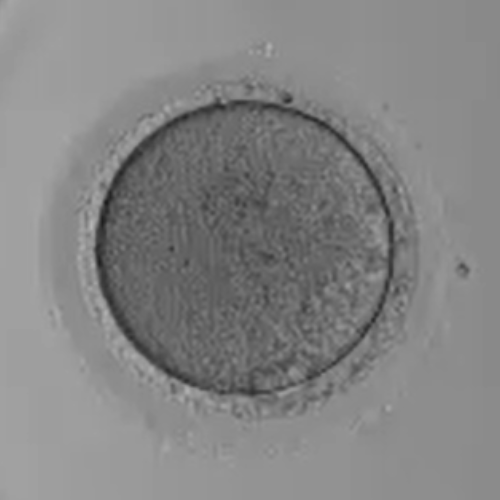
Day 0 - Insemination
- ICSI: A single sperm is injected into each mature egg, then placed in Geri
- IVF: Egg and sperm are combined in a dish and cultured in an incubator
Why does an undisturbed environment matter?
An embryo developing in the first five days after fertilisation is extraordinarily sensitive to its environment. Small disruptions in temperature, pH, gas concentration or light exposure can affect how cells divide and whether the embryo successfully reaches the blastocyst stage.
Traditional incubation required opening the incubator to assess embryo development on Day 3, which caused brief but repeated disruptions to these conditions. The Geri® eliminates this entirely. Its integrated time-lapse cameras mean embryologists can review a complete record of every embryo's cell division and developmental milestones without ever opening the incubator.
Each chamber also has its own independent sensors monitoring temperature, CO2 concentration and humidity in real time, with alarm systems that alert the laboratory team to any deviation from optimal conditions.
FAQs
The role of humidity
One of Geri®'s distinguishing features is its ability to provide a humidified environment in each chamber. This matters because the natural environment within the fallopian tube, where an embryo would normally develop during its first 5 days, is warm and humid. Most traditional incubators operate in dry conditions, which can cause the culture media to gradually concentrate as it evaporates, changing its osmolality in ways that may affect embryo development.
A 2022 study found that embryos developed in humidified conditions had higher blastocyst rates, better morphological quality, and higher pregnancy, ongoing pregnancy and implantation rates compared to embryos cultured in dry conditions.²
The Geri® is the only humidified time-lapse incubator available in Australia, and Genea is the only clinic in Australia using it as standard practice.
Individual chambers for every patient
Each of the Geri®'s six chambers is independently controlled and dedicated to a single patient. This means:
- Your embryos are never in shared space with another patient's embryos
- Temperature, gas concentration and humidity in your chamber are controlled independently of every other chamber
- If one chamber needs to be opened, the conditions in your chamber are not affected
- Each chamber has its own CO2 sensor, its own heating elements, and its own camera
This level of individualisation is not standard in traditional incubation systems, where a single large incubator might house the embryos of many patients simultaneously, and opening the door for one patient's embryos briefly affected the environment for all others.
Find out more
- Learn the science behind Day 5 and single embryo transfers
- Learn about embryo culture media, the vital solution that nurtures eggs, sperm, and embryos outside the body
- Everything you need to know about IVF
References
- Peura, T., Murray, A., Hesketh, N., Dalati, S., Bowman, M., & McArthur, S. (2020). Is the biggest impact on clinical IVF outcomes obtained by implementation of continuous media, time-lapse incubator or both? Fertility and Sterility, 114(3 Suppl.), e129. https://doi.org/10.1016/j.fertnstert.2020.08.383
- Valera, M. Á., Albert, C., Marcos, J., Larreategui, Z., Bori, L., & Meseguer, M. (2022). A propensity score-based, comparative study assessing humid and dry time-lapse incubation, with single-step medium, on embryo development and clinical outcomes. Human Reproduction, 37(9), 1980–1993. https://doi.org/10.1093/humrep/deac165
.png "Genea logo")
.png)
