

31 August 2026: Who should carry our baby? The path to parenthood for same-sex couples | Women's Agenda
Insights from:
Key takeaways
- There is no single pathway to parenthood for female same-sex couples. Decisions about who carries the pregnancy and how each partner is involved will depend on personal preferences and individual circumstances.
- IVF isn't always the first or only fertility treatment option. For some people without identified fertility issues, intrauterine insemination (IUI) may be an appropriate option.
- Reciprocal IVF allows both partners to be physically involved, with one partner providing the eggs and the other carrying the pregnancy.
- Known and clinic-recruited sperm donors are both options, with different considerations around screening, counselling, consent and legal requirements.
- Age, ovarian reserve and medical history can influence treatment decisions, alongside donor availability, family-building goals and each partner's preferences.
- You don't need to have every decision made before seeing a fertility specialist. An initial appointment can be an opportunity to understand your options and start working out which pathway feels right for you.
Finding the right path to parenthood
For women in same-sex relationships who are thinking about starting or growing their family, one of the first questions may be who will carry the pregnancy.
But the decision can involve much more than choosing a carrying parent.
In a recent Women's Agenda feature, Genea Fertility Specialist Dr Alice Huang discussed some of the different pathways available to same-sex couples, from IUI and IVF to reciprocal IVF and donor sperm treatment.
She also addressed a concern she sometimes hears from couples: whether the parent who doesn't carry the pregnancy will somehow have a less important role.
For Dr Huang, good fertility care means recognising both parents as equal participants in the family they are creating.
"We need to remind them and we need to be very mindful that the family that's been created, no matter whose body is involved in what step, the family that is created belongs to both parents."
The right pathway will look different for every couple, and deciding what feels right can involve medical, practical and emotional considerations.
What is reciprocal IVF?
For couples who would both like to have a physical role in conception and pregnancy, one option is reciprocal IVF, sometimes called shared IVF.
With reciprocal IVF, one partner provides the eggs, which are fertilised using donor sperm through IVF. An embryo is then transferred to the other partner, who carries the pregnancy.
As Dr Huang explains, this means one partner can have a genetic connection to the embryo while the other has the experience of pregnancy and birth.
For some couples, having both partners involved in this way can be particularly meaningful.
However, reciprocal IVF isn't necessarily the right choice for everyone. Some couples may prefer a more straightforward pathway, while individual fertility and medical circumstances may also influence the options available.
Understanding what matters to both partners can therefore be an important part of deciding how to move forward.
IVF isn't the only option
A common misconception Dr Huang encounters is that women in same-sex relationships automatically need IVF to conceive.
That isn't always the case.
For some women who ovulate regularly, have open fallopian tubes and don't have other identified fertility factors, intra-uterine insemination (IUI) may be an appropriate treatment option.
IUI involves preparing donor sperm and placing it directly into the uterus around the time of ovulation, allowing fertilisation to potentially occur within the body.
IVF involves collecting eggs from the ovaries and combining them with sperm in the laboratory to create embryos. An embryo can then be transferred into the uterus.
Which pathway is appropriate depends on the individual. Dr Huang explains that factors such as age, ovarian reserve, medical history, donor sperm availability and any fertility factors affecting either partner can all form part of developing a treatment plan.
Couples may also want to consider how many children they hope to have, their timeframe for building their family and how each partner would like to be involved.
Deciding who will carry the pregnancy
There isn't a right or wrong answer to who should carry a pregnancy.
For some couples, the decision may feel clear from the beginning. For others, it may take time to work through their options.
Medical factors can form part of the discussion, but Dr Huang also encourages couples to consider their emotional and relationship needs.
One partner may want to carry the pregnancy, while another may prefer to provide eggs. Some couples may be interested in reciprocal IVF, while others may decide that having both partners physically involved in conception isn't important to them.
The goal is to make a decision that reflects the couple's circumstances and family-building goals.
As Dr Huang told Women's Agenda:
"When both partners feel informed and heard and not rushed, I think that's how they come up with the best decisions."
Choosing a sperm donor
Donor sperm is another important consideration for female same-sex couples planning a pregnancy.
Broadly, couples may consider a known donor or a clinic-recruited donor.
A known donor is typically someone already known to the couple, such as a friend or another person within their social circle.
A clinic-recruited donor is recruited through a fertility clinic or sperm bank and undergoes processes including health screening, genetic screening, counselling and consent.
Importantly, Dr Huang explains that sperm donation in Australia should not be thought of as anonymous donation. Donor-conceived people may have rights to access identifying information about their donor once they reach adulthood, although the specific requirements and donor-conception laws vary between Australian states and territories.
There are also limits on the number of families that can be created using sperm from an individual donor, with requirements varying depending on the jurisdiction.
What about using a known donor?
For some families, knowing their sperm donor can be particularly meaningful and may allow their child to have a connection with the donor as they grow up.
However, known donor arrangements can also involve additional considerations.
Dr Huang emphasises the importance of appropriate counselling and clearly understanding everyone's intentions and roles before treatment begins.
She recommends pursuing known donor treatment through a formal fertility service rather than attempting DIY home insemination, which may raise health, legal and ethical considerations.
Working through these issues before treatment provides an opportunity for everyone involved to understand the arrangement and make informed decisions before a pregnancy occurs.
You don't need to have all the answers
Starting to explore fertility treatment can sometimes feel as though it comes with a long list of decisions.
Who will carry? Who will provide eggs? Should you consider IUI, IVF or reciprocal IVF? Should you use a known or clinic-recruited sperm donor?
But you don't need to have all of those answers before your first appointment.
For Dr Huang, an initial consultation can simply be an opportunity to explore the possibilities.
"The first appointment can actually just be mapping out the options. It's completely normal to still be deciding what they want."
Having time to ask questions and understand the different pathways can help couples make decisions based on their medical circumstances, preferences and hopes for their future family.
About the authors
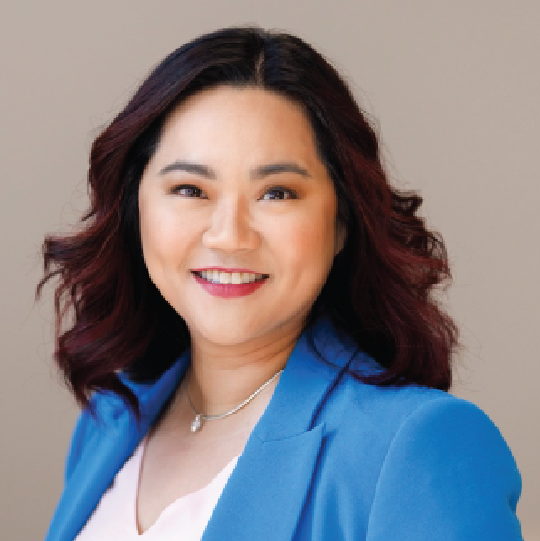
Dr. Alice Huang
Fertility Specialist MBBS(Hons), FRANZCOG, MRepMed
Melbourne IVF Specialist Dr Alice Huang provides expert holistic fertility treatment combining evidence-based reproductive medicine.
View profile
Talk to a Fertility Concierge
If you and your partner are considering starting or growing your family and would like to understand your fertility options, our Fertility Concierge team is here to help.
Whether you're exploring donor sperm, IUI, IVF or reciprocal IVF, our Fertility Concierge can answer your initial questions and connect you with the right Genea Fertility Specialist when you're ready.



.png "Genea logo")
.png)
